
Most buyers comparing Alpharetta and Milton start by asking which city has the lower tax rate or the bigger lot. The better question is which one lets you actually use the property you're paying for, and in North Fulton that often comes down to what's underground.
I'm Laura Lerman, a REALTOR® with The Lerman Team at eXp Realty in Alpharetta. Below is how I walk move-up buyers through sewer versus septic, the real tax math, school zones, commutes, and the contract protections that keep a deal alive.
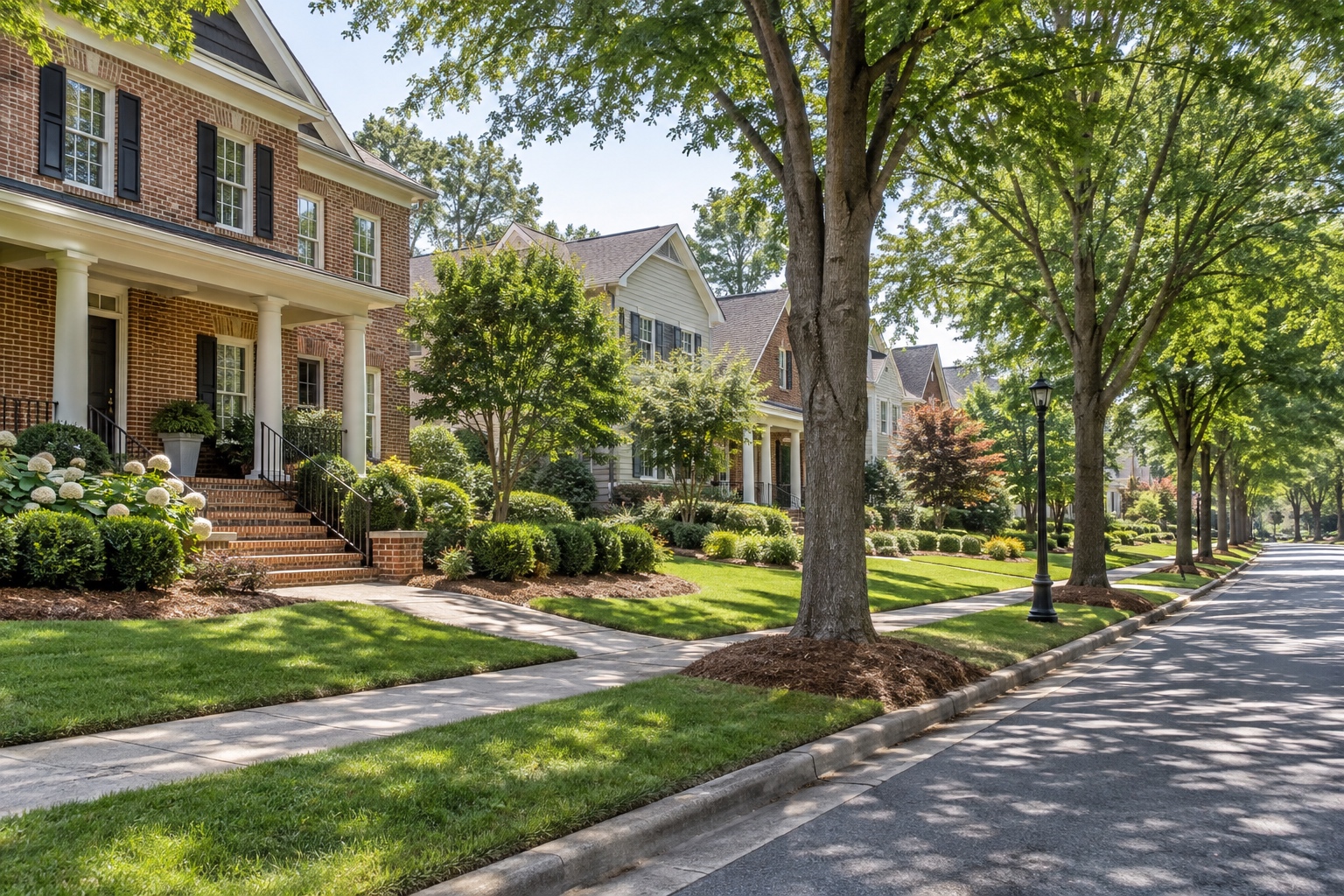
Alpharetta vs. Milton: The Short Answer for Move-Up Buyers
Choose Alpharetta if you want municipal sewer, walkability, and quick GA-400 access. Choose Milton if you want acreage, privacy, and the freedom to build detached structures, and you're willing to do septic, tree, and school-zone homework first.
The two cities share Fulton County Schools and most of the same tax bill, so the real differences are physical and regulatory. Downtown Alpharetta and Avalon work as a walkable, mixed-use hub where detached homes near the core can run roughly $400 to more than $600 per square foot. Milton protects rural character through large-lot AG-1 zoning and confines commercial activity to nodes like Crabapple, which is why so many buyers leaving 0.3-acre subdivisions look there for 1- to 3-acre estates.
The Septic Reserve Rule Most Milton Listings Never Mention
Most Milton homes use private septic, and the Fulton County Board of Health requires an undisturbed replacement drainfield equal to 100% of the active one. That reserve area cannot be built on, graded, or paved, so a two-acre Milton lot can offer less usable yard than a sewered lot a fraction of its size in Alpharetta.
This is the nuance listing portals miss. They show gross acreage, not how much of it is tied up in absorption lines, reserve fields, and protected root zones. In my experience, buyers fall for the backyard in the photos and only learn during due diligence that the flat ground is already spoken for.
Here is how I'd protect a Milton purchase:
- Have a septic contractor locate, uncover, pump, and camera-scope the system (typically $600 to $1,500).
- Pull Fulton County Department of Health records to see exactly where the reserve area sits.
- Order a Level III soil survey if you plan a pool, addition, or guest suite.
- Negotiate a 14-day due diligence period instead of the standard 7 to 10 days.
- Budget for the downside: rebuilding a failed drainfield generally runs $12,000 to $35,000.
Alpharetta's single-family lots are almost uniformly sewered, so a 0.4-acre lot there can often fit a pool and cabana without health-department constraints.
Weighing a Move-Up Purchase in Alpharetta or Milton?
Before you make an offer on an acreage estate or sewered lot, let's verify the septic reserve field, tree rules, and actual parcel-level school zones together.
Schedule a Parcel Review: (770) 833-8786
Do Alpharetta and Milton Really Have Different Property Taxes?
Only slightly. Fulton County (8.87 mills) and Fulton County Schools (about 17.14 mills) make up more than 80% of the bill in both cities, so the city rate is a small slice.
| Tax item | Alpharetta | Milton |
|---|---|---|
| City millage (operations plus debt) | 5.750 | 4.503 |
| Base municipal homestead deduction | $45,000 | $15,000 |
| Floating cap, owner-occupied homes | Lower of 3% or CPI | Lower of 3% or CPI |
On a $1.2 million purchase, the yearly difference between the two cities is typically under $600, because Alpharetta's larger deduction offsets much of its higher rate. Investors don't receive the floating cap, so non-owner-occupied homes are reassessed at full market value each year. Confirm current rates on your assessment notice from the Fulton County Board of Assessors. If you're 65 or older, read my senior property tax exemption guide first, because changing homes can reset the homestead history that the school-tax exemptions require.
Why a Milton Address Doesn't Guarantee Milton High School
School assignment in North Fulton follows Fulton County Schools attendance zones, not your postal city or city limits. Cambridge High School sits inside Milton yet serves parts of northeastern Alpharetta, and many Alpharetta-mailing-address homes (ZIP 30004) fall inside Milton city limits.
Verify every address at the parcel level with the Fulton County Schools Attendance Zone Identifier, because a short move can shift a student between Milton High and Cambridge High and break up a peer group. Alpharetta High offers the International Baccalaureate Diploma Programme, Cambridge is known for STEM strength, and Milton High has deep AP and athletic traditions. Boundaries split by subdivision phase, so treat the neighborhoods below as examples, not guarantees.
| High school | Example neighborhoods |
|---|---|
| Alpharetta High School | Windward (select phases), Academy Park, Avalon |
| Milton High School | Crabapple Brook, White Columns, Providence |
| Cambridge High School | The Manor Golf and Country Club, Bethany Creek, Triple Crown |
What the Commute Really Looks Like From Milton and Alpharetta
Milton has no GA-400 ramps within its city limits, so most residents drive 15 to 25 minutes on two-lane roads like Highway 9, Hopewell Road, or Birmingham Highway before reaching Old Milton Parkway (Exit 10) or Windward Parkway (Exit 11). Alpharetta homes typically reach a GA-400 interchange in 3 to 8 minutes.
| Route | Off-peak | Peak morning |
|---|---|---|
| Northwestern Milton to Central Perimeter | About 32 min | 55 to 80 min |
| Windward to Buckhead | About 22 min | 45 to 70 min |
| Downtown Alpharetta to Midtown Tech Square | About 28 min | 50 to 85 min |
| Crabapple to Downtown Alpharetta | About 8 min | 18 to 28 min |
GDOT's GA-400 Express Lanes project, targeted for 2031 north to McGinnis Ferry Road, should help homes near Exits 8 through 11 most and offer limited relief to northwestern Milton. If you work remotely or hybrid, Milton's road network is an easy trade for the privacy. If you commute to Perimeter or Buckhead five days a week, I'd test-drive that route at 7:45 AM before writing an offer.
Tree Rules, HOA Fees, and Other Costs Portals Leave Out
Milton restricts removal of specimen trees (hardwoods 24 inches DBH or larger, pines 27 inches or larger) and generally requires replanting 150% of the removed canopy or paying into the city tree fund. Alpharetta's master-planned communities like Windward add one-time capital contributions and leasing caps that portals rarely show.
- Milton trees: Milton targets 57% citywide canopy. Document dead or hazardous trees with an arborist during due diligence so removal doesn't trigger recompense fees.
- Windward transfer costs: Expect a $1,000 master association capital contribution plus roughly $300 to $800 in sub-association transfer fees.
- Club equity: Gated golf communities such as The Manor can carry initiation or membership transfers of $15,000 to $50,000 or more.
- Leasing caps: HOAs in both cities often limit rentals to 5% to 10% of homes, sometimes with multi-year waitlists.
- Stormwater fees: Both cities charge roughly $60 to $180 per year based on impervious surface.
Buyers weighing HOA living against fee-simple ownership may also want my breakdown of fee-simple versus condo and townhome ownership in Alpharetta.
Price and Speed: How the Two Markets Compare
Milton's detached median sits around $1.1 million, versus roughly $785,000 to $888,000 in Alpharetta, and Alpharetta homes generally sell faster. Figures vary by data source and month, so compare detached single-family sales only.
| Metric | Alpharetta | Milton | Johns Creek | Roswell |
|---|---|---|---|---|
| Median detached price | $785,000 to $888,000 | About $1,100,000 | About $700,000 | $585,000 to $600,000 |
| Median days on market | 13 to 35 | 37 | 61 | 30 to 38 |
| City millage | 5.750 | 4.503 | 3.986 | 4.988 |
| Sewer | Municipal | Mostly septic | Municipal | Mixed |
Lower Alpharetta figures often blend in condos and townhomes, so for a move-up purchase I anchor to the detached-only number. For the full picture, see my Alpharetta housing market update and home appreciation guide.
Where North Fulton Contracts Fall Apart
Deals here rarely fail on price alone. They fail on septic reserve conflicts, specimen tree rules, HOA leasing caps, and appraisal gaps on custom acreage, and each is discoverable during due diligence if you know to look.
- Septic (illustrative): A buyer contracts on a $1.45 million home on 1.2 acres in Milton, planning a pool. The reserve field sits under the level rear lawn, a soil survey finds dense clay, and the seller refuses a $75,000 concession.
- Trees (illustrative): A buyer near Crabapple plans to clear five trees for lawn and play equipment. An arborist identifies two healthy 28-inch white oaks, and the replanting or fee exposure ends the deal.
- HOA (illustrative): A buyer in an Alpharetta master-planned community plans to rent the home after two years. The 5% leasing cap and a 35-owner waitlist, an estimated four to seven years, make that impossible.
- Appraisal (illustrative): A $2.75 million contract on 4.5 acres off Birmingham Highway appraises at $2.45 million because comparable multi-acre sales are scarce. With no gap clause, the buyer can't cover the $300,000 shortfall.
Financed purchases on septic typically take 45 to 55 days to close, versus 35 to 45 on public sewer, so plan your move-up timing accordingly. My guides on buying and selling at the same time in Alpharetta and the seller net sheet show how to line up your equity first.

Which Buyer Fits Which City?
Buyers who commute daily, want walkability, or may rent the home later usually fit Alpharetta. Buyers who work from home and want acreage, detached workshops, or equestrian space usually fit Milton.
- Moving up from a 0.3-acre subdivision: Milton delivers the land, but only after the septic, tree, and school-zone checks above.
- Needing a pool or sport court: Either city can work, but on septic the reserve area decides it.
- Buying as an investor: Alpharetta's sewer, GA-400 proximity, and corridor demand generally reduce risk.
- Selling first: Start with the sellers guide for Alpharetta homeowners so your purchase budget is based on real numbers.
Common Questions About Alpharetta vs. Milton
These are the questions I hear most from buyers weighing the two cities. Each answer reflects Fulton County rules as they apply to North Fulton parcels.
Does a Milton postal address guarantee enrollment at Milton High School?
No. Fulton County Schools assigns students by attendance zone, not by mailing address or city limits. Cambridge High School sits inside Milton but serves parts of northeastern Alpharetta, so verify any address with the district's Attendance Zone Identifier.
Is Milton property tax really lower than Alpharetta's?
Only slightly. Milton's city millage is 4.503 versus Alpharetta's 5.750, but Fulton County and Fulton County Schools make up over 80% of the bill in both cities, and Alpharetta's larger base homestead deduction ($45,000 versus $15,000) narrows the gap. On a $1.2 million home the annual difference is typically under $600.
Can I add a pool to any one-acre lot in Milton?
No. Fulton County prohibits building, grading, or paving over an active septic drainfield or its required 100% reserve area, so the pool must fit on ground outside both. Get a septic scope, Level III soil survey, and health-department site approval during due diligence before relying on a pool plan.
Next Step: Review the Parcel Before You Fall for the House
Before you make an offer in either city, check the sewer or septic status, school attendance zone, tree constraints, and HOA leasing rules for that exact address. I'm happy to walk through that parcel-level review with you, and if you're selling first, my Alpharetta home value estimate is a good starting point.
Laura Lerman, REALTOR®
The Lerman Team | eXp Realty, LLC | License #365412
5755 North Point Pkwy Unit 51, Alpharetta, GA 30022
(770) 833-8786 | laura@lermanteam.com